ABOUT THE CONCEPT

To understand the Concept & Services of

Stolen????- where you can help yourself and others:

StolenKids- 4 Those losing kids due to 'authorities' ie Forced Adoption & Care!

GO TO http://stolenkids-bloggers.blogspot.com/ Or perhaps more suited to YOUR needs:

StolenChildhood- 4 those facing abuse past or present sexual or other!

GO TO http://stolenchildhood-bloggers.blogspot.com/ or

StolenTrust- 4 those where or have suffered abuse within a relationship!

GO TO http://StolenTrust-bloggers.blogspot.com/
or
StolenOyster- 4 those who have been abused or raped by a stranger or stalker

GO TO http://StolenOyster-bloggers.blogspot.com/

Pages

Wednesday, 19 November 2003

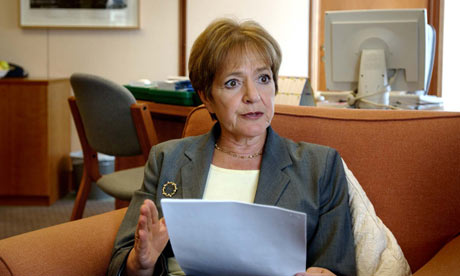
Margaret HODGE - ISLINGTON - 19-11-2003

Timeline: Margaret Hodge Row

Tash Shifrin outlines key dates in the row over how the children's minister dealt with reports of child abuse at a London council that surfaced when she was the council's leader

Society Guardian,
Wednesday 19 November 2003

Article history

1982
Margaret Hodge became Labour leader of Islington council.

1985
Demetrious Panton complained to senior figures at Islington council about being abused while in the council's care in the 1970s and early 1980s. He received no official reply until 1989, when the deputy social services director, Anthony Cousins, wrote to say the council regretted what had happened but did not believe it was at fault.

April 1990
Senior social worker Liz Davies and her manager, David Cofie, raised concerns about sexual abuse to one of Islington's neighbourhood forums. They asked for extra staff to help investigate but were turned down. Ms Hodge wrote a memo to the director of social services saying the budget would not allow extra staff. Ms Davies and Mr Cofie continued to raise concerns, sending "about 15 reports to senior managers and the area child protection committee". The committee decided there was no cause for concern.

February 1992
Liz Davies resigned from her job after being ordered to place a seven-year-old boy in a care home run by someone she had raised concerns about. She took her information to Scotland Yard.

1992
Mr Panton raised his case again with Stephen Twigg, then an Islington councillor, and now minister for schools and a colleague of Ms Hodge at the Department for Education and Skills. In 1996 Mr Twigg, who has also worked as Ms Hodge's parliamentary assistant, told the press he wished he had "taken it up in a more active way at the time" and admitted his failure to raise the case with Ms Hodge "may be a criticism of me".

October 6 1992
The Evening Standard began a series of reports alleging that dozens of children at two Islington council homes were abused. Ms Hodge accuses the Standard of "gutter journalism" and rejected its dossier on paedophile activity in the homes.

October 23 1992
Margaret Hodge stepped down as council leader to take a post with consultants PriceWaterhouse.

May 23 1995
An independent inquiry led by the director of Oxford social services, Ian White, found that the council failed to properly investigate the sexual abuse allegations. The inquiry report said it was possible many of the allegations were true and that abusers "are still working in the field elsewhere". Of 32 named staff alleged to be involved in abuse, only four were disciplined. Two remained in post, including one working in childcare. The White report described the way the council was run at the time of the allegations as "disastrous".

June 13 2003
Ms Hodge was appointed children's minister. Her appointment sparked a renewed campaign against her by the Standard, which had been vindicated in its 1992 reports by the 1995 White inquiry. Liz Davies, previously an unnamed whistleblower, went public in her anger at the appointment.

June 30 2003
Ms Hodge rejected calls for her resignation as children's minister. She acknowledged making one "terrible error of judgement" in 1992. But she added: "I think in the context of those times, people will understand why I made that [error of] judgement. I hope they understand that I've learned the lessons from that."

November 11 2003
Ms Hodge tried to block a BBR Radio Four Today programme investigation into the abuse in Islington children's homes. She wrote to the BBC chairman, Gavin Davies, to condemn the programme, accusing it of "deplorable sensationalism" and called Mr Panton, who spoke to the BBC, an "extremely disturbed person". Mr Panton, now a government consultant, said Islington council had repeatedly ignored claims that he had been abused as a child by Bernie Bain, who was head of the children's home where he lived, in 1978. Bain, described by police as a "brutal sexual abuser", has since committed suicide.

November 15 2003
Mr Panton rejected the minister's written apology for her remarks and said they were not genuine. He demanded a public apology, a donation to a children's charity of his choice and payment of his legal costs.

November 19 2003 Margaret Hodge issued a public apology to Mr Panton, read in the high court. Her statement said she was genuinely sorry for labelling him disturbed and accepted the allegation "ought never to have been written".

To view the original article CLICK HERE


To understand the Concept & Service of StolenKids-
where you can help yourself and others at:


StolenKids-


To See The Links Page
CLICK HERE


To understand the Concept & Service of StolenKids-
where you can help yourself and others at:
StolenKids-
To See The Links Page
CLICK HERE

Wednesday, 16 February 2000

"LOST IN CARE" - by WATERHOUSE - WALES - 16-Feb-2000

"LOST IN CARE" - WATERHOUSE - WALES - 16-Feb-2000

Lost in care, report of the tribunal of inquiry into the abuse of children in care in the former county council areas of Gwynedd and Clwyd since 1974

Document type: Publication

Author: Department of Health

Published date: 16 February 2000

Primary audience: Professionals

Product number: 0105566608

Gateway reference: 2000

Series number: HC Session 1999-00 201

Pages: 937

Copyright holder: Crown Copyright

To See The Full Report In Browsable Version CLICK HERE


To understand the Concept & Service of StolenKids-
where you can help yourself and others at:
StolenKids-
To See The Links Page
CLICK HERE

Friday, 15 August 1997

1997 - PROTECTION FROM HARASSMENT ACT 1997

The Protection from Harassment Act 1997 (“the Act”) came in to force in July 1997. Twelve years on it is now being used by celebrities to curtail the activities of the press.

The purpose of this article is to:-

1) consider the Act;
2) analyse its use by celebrities; and
3) consider whether that use has, is, or is likely to amount to an abuse of the Act.

Injunctions under the Act have proved to be highly attractive civil remedies as they are enforceable in the criminal Courts. Consequently breach of any injunctions ordered under the Act “without reasonable excuse” is a criminal offence.

The tests contained in the Act are both subjective and objective. The subjective limb prohibits a person from acting in a manner “…which he knows or ought to know amounts to harassment…” The objective test provides that a course of conduct shall amount to harassment “…if a reasonable person in possession of the same information would think the course of conduct amounted to harassment of the [victim]”. Both these tests represent safeguards built in to the legislation to ensure that the meaning of “harassment” is clear to all.

Another in-built safeguard is that injunctions are equitable remedies. As such a Court will only grant an injunction where it is considered that it would be just and reasonable to make an Order.

Many people consider, perhaps erroneously, that the Act was principally brought in to curb stalking. Although stalking was undoubtedly in the minds of the legislators, a conscious decision was taken by John Major’s government to reject the Stalking Bill 1996 and to make a wider and further-reaching piece of legislation.

The surge of public interest in celebrities in recent years has fuelled an unprecedented amount of news, especially for “gossip” magazines. As a consequence of this many celebrities have been pursued by armies of journalists and paparazzi. Many celebrities have now started to consider injunctions under the Act as a way of containing the media, especially, given the potential sanctions and immediate power of arrest which come with the injunction package. Indeed it seems surprising, from a legal perspective, that it has taken so long for celebrities to exploit this area of the law.

The use of these injunctions was pioneered by celebrities such as Sienna Miller, Amy Winehouse and Lily Allen. Indeed these injunctions seem to be the latest “must-have” for any A-lister given the fact that Simon Cowell, Frank Lampard and John Terry are all rumoured to be considering obtaining them. But does this represent a step too far? Whilst respect must be had for the private lives of public figures and celebrities, it seems outrageous that Sienna Miller should shamelessly boast (whilst being interviewed by Jeremy Clarkson on Top Gear) about exposing herself to paparazzi who were unable to respond due to a Court Order.

These injunctions have been used in a wide range of scenarios varying from the protection of the vulnerable from violent or sinister individuals to the protection of thousands of employees from being targeted by quasi-terrorist ‘direct action groups’. Yet none of the uses of the Act have been seen by victims as amusing as Sienna Miller seemed to find. Is it right that an Act intended for the protection of vulnerable individuals should be regarded in such a seemingly absurd manner? Is it right that celebrities who rely on the media for their fame and fortune should be able to invoke a power of arrest when the glare of the press doesn’t suit them? This trend, of apparent “designer injunctions”, undermines Parliament’s intentions. It is highly doubtful whether Parliament intended for the Act to be used in such a frivolous and unreasonable manner especially with the freedom of the media at stake. It is high time the media adopted a more robust approach to this cavalier and rather Draconian behaviour.

Tim Lawson-Cruttenden and Sehar Ali-Noor specialise in the law of harassment. Their website is at www.lawson-cruttenden.co.uk


To understand the Concept & Service of StolenKids-
where you can help yourself and others at:
StolenKids-
To See The Links Page
CLICK HERE